


Faculty and Presenters
We're thrilled to have the following speakers and presenters joining us at the 2026 foray.

Dorothy Smullen
Orchids and Fungi: Perfect Together
The Orchidaceae is one of the largest flowering plant families. There are also
5 times as many hybrids produced by humans. But what is amazing is that NONE of
the true species would exist in nature without certain species of the fungi kingdom.
Come and learn about this remarkable connection.

Colin Domnauer
Bolete Diversity
Bolete mushrooms are notoriously diverse, but just how many boletes are out there? In this talk, Colin will share the latest scientific findings surrounding Boletaceae mushrooms in North America. He will explore what species exist, how they're related, how we can identify them in the field, and how community scientists are a pivotal part of making these exciting discoveries possible. He will also discuss some interesting properties beginning to be uncovered within this diversity, such as boletes that produce strange hallucinations of little people when eaten undercooked!
Dr. Mary Catherine Aime
Fungal Diversity in the "Lost World"

The Tepui region of South America contains some of the most remote and
pristine forests on the planet. Mycological expeditions over the last 20+ years in
the Pakaraima Mountains of Guyana have yielded a cornucopia of unusual
fungi including hundreds of new species and genera of macrofungi. In addition
to introducing some of these unique fungi that have evolved there, this talk will
cover the basics of conducting fieldwork in remote areas, and the contributions
that only long-term studies combined with specimen vouchering and various
molecular approaches can bring to understanding the ecology and diversity of
any system, especially in understudied tropical regions of the world.
William Kochanov
Local Geology and Ecology
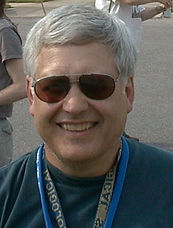
Join Bill K. as he takes you on a savage journey across time and space to examine the bedrock beneath the forested veneer of South Mountain. Imagine the South Mountain area 570 to 700 million years ago, where volcanism and the split up between Laurentia and Rhodinia were the talk of the day. Follow each thrilling episode of mountain building, coupled with the omnipresent ping-ponging of climate change, and culminating with the landscape we experience today.
As we delve deeper, we will focus on how ecological relationships are developed from the physical and chemical weathering of differing rock types, and how their components are translated into a nutrient-laden smorgasbord of tasty ions and minerals necessary for the development of regional floral, fungal, and faunal systems.
Dennis Waters
Lichen Diversity

Dennis Waters is a scientist, historian, author, and retired internet entrepreneur. He is a visiting scientist at Rutgers University, where he studies the lichens of the mid-Atlantic region. Dennis serves on the Mercer County Library Commission, chairs the endowment committee of the Philadelphia Botanical Club, and for twelve years was Township Historian in Lawrenceville, NJ. His book Behavior and Culture in One Dimension: Sequences, Affordances, and the Evolution of Complexity was published by Routledge in 2021.
John Plischke
Chemical ID of Fungi Workshop

Many chemicals can be helpful with mushroom identification. When a drop of a chemical such as ammonia is applied to a mushroom it is done to see any color reactions that can help aid in the identification process. This can be very useful with boletes and other mushrooms.
Participants will be bringing home bottles of KOH, Ammonium Hydroxide, Ferrous Sulfate, and Congo Red. Weighing, mixing and bottling of at least one of these reagents will be done in the workshop.
Hannah Huber
Pennsylvania's Conservation Mycology Program

Hannah Huber is the Conservation Mycologist for the Pennsylvania Natural Heritage Program at the Pennsylvania Department of Conservation and Natural Resources, and the secretary of NEMF. Building a fungal conservation program has drawn upon her varied experience working in a fungarium, a mycology lab, an organizer for climate action policy, an invasive species educator, and as a sustainable agriculture planner for the USDA Natural Resource Conservation Service. She is a grateful 2017 recipient of the NEMF Homola scholarship.
Imagine clear policies related to fungi collection, an up-to-date state species list everyone references, state parks and forests that celebrate community mycologists' discoveries, state-funded fungal biodiversity research, and protection and stewardship of rare fungi. These are all goals and developing realities for the conservation mycology program in Pennsylvania, and Hannah will outline the steps, challenges, and wins along the way.
Noah Siegel
Intermediate Mushroom ID Workshop

Noah is one of North America’s foremost field mycologists; he has spent over three decades seeking, photographing, identifying, and furthering his knowledge about all aspects of macrofungi. He travels and lectures extensively across America, following the mushrooms from coast to coast.
Noah was the recipient of the 2022 North American Mycological Association’s Award for Contributions to Amateur Mycology. His primary research interest is on the taxonomy and systematics of fungi. He authored, along with Christian Schwarz, Mushrooms of the Redwood Coast, a Comprehensive Guide to the Fungi of Coastal Northern California and Mushrooms of Cascadia, a Comprehensive Guide to
Fungi of the Pacific Northwest. His most recent book, Mushrooms of Alaska, with Steve Trudell and Kate Mohatt was released fall of 2025.
Josh Herr
Understanding Fungal Interactions Through the Integration of Nucleotide Sequencing and Ecosystem Data

The Kingdom Fungi embodies a staggeringly diverse array of ecological roles and life history strategies. The advent of multiple types of nucleotide and protein sequencing methods, along with a plethora of ecosystem and community derived data, has enabled mycologists to understand the roles that fungi play in our environments. This talk will review the role of sequencing and computational biology in understanding the diversity and ecology of fungal interactions. Dr. Herr
will use examples from the work of his laboratory group – as well as the work of other mycologists – to underscore how we are living in a golden age of fungal discovery.
Anthony Goodman
Resin Cast Mushrooms Workshop

Fungi have a way of keeping secrets. Much of their lives are hidden from view until they fruit, producing brief, beautiful forms that can seem almost alien compared with plants and animals. For mushroom educators, this creates a challenge: photographs, field guides, and dried specimens are useful, but they rarely capture the shape, color, and presence of a fresh mushroom.
In this hands-on workshop, Anthoni Goodman, founder of the Alabama Mushroom Society, will share his approach to long-term mushroom preservation using resin casting. Participants will learn practical techniques for preserving mushrooms in a way that better reflects their fresh form—and will leave with a preserved specimen of their own.
The MycoMap Network: eDNA in Action + Scaling Conservation Outcomes
Stephen Russell
.jpg)
The MycoMap Network is moving beyond large-scale specimen barcoding toward conservation action. In 2026, we are expanding into environmental DNA, or eDNA, to detect fungi directly from habitats and ecosystems, including species that may be present but not actively fruiting. These workflows will help build the networks, platforms, and data needed for systematic, real-time fungal conservation metrics and habitat assessments.
Through our first conservation initiative, Certified Fungal Habitat, MycoMap is creating practical ways for the public to support fungal life and move fungi from the margins of biodiversity conversations into everyday conservation. Rather than focusing only on land protection, the initiative makes fungi visible through community engagement, habitat recognition, and physical markers that spark conversations about the essential role of mycelium in healthy ecosystems.
Saleh Rahimlou
Malassezia Yeast and Ecological Interactions

The fungus Malassezia is the most prevalent member of the human skin mycobiota, known for its lipid dependence and inability to synthesize long-chain fatty acids. Malassezia exhibits remarkable niche breadth, inhabiting soils, dust, as well as various marine environments from polar regions to deep-sea vents. The consistent presence of Malassezia in marine habitats, including those associated with marine animals, suggests that the fungus is able to grow and play a fundamental role in marine ecosystems. Our data suggest that many observations of Malassezia in the environment are derived from human sources and that widespread contamination confounds the exploration of Malassezia diversity and ecological role in the marine environment.
Maya Han
Myco Film Fest
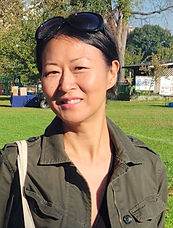
In recent years there has been an efflorescence of film and video on the mycological world and we are excited to showcase it at this year’s NEMF! This program highlights an international roster of short documentary, animation, and experimental films and media art, all illuminating the fascinating world of fungi and exploring mycology in bold new ways. Fungi embody collaboration and community-– one of the main themes explored and celebrated in this program.
Juliette Jamieson
Fungal Microscopy Workshop

This workshop will focus on the basics of light microscopes and how to use them to identify fungal structures for identification purposes. After a brief lecture, we'll spend time preparing slides, looking at mold, yeast, and mushrooms under the microscope, and building familiarity with microscopic features of fungus.
Feel free to bring spore prints and fungal specimens to observe!
Todd Elliott
Ethonomycology: The Interface Between Humans and Fungi

Come join Todd Elliott for a globe trotting journey into the relationships between humans, fungi, and ecosystems. The talk will cover a range of fungi and their importance to humans both here in the US and around the world. Todd will discuss the importance of fungi to humans ranging from foragers to gourmet foodies!